Practical Actions to Cope with Stress, Anxiety, and Trauma
When I’m asked for guidance on how to cope with stress and anxiety, including the symptoms of post-traumatic stress disorder (PTSD) and complex post-traumatic stress disorder (C-PTSD), my answer is almost always a mixture of skills and types of support.
Internal coping skills: Techniques such as self-talk, reflection, education, and journaling.
External coping skills: Actions and behaviors that are beneficial to one’s health, circumstances, and environment.
Community and cultural supports: Family, friends, peer support, neighbors, faith community, etc.
Professional support: Mental health professionals such as therapists and medication providers, crisis support (such as the 988 hotline), etc.
No two people are the same. Everyone’s coping and support plans need to be individualized and tailored specifically to them and their unique life circumstances. Having a variety of coping skills and supports in one’s “coping toolbox” is crucial for effectively reducing, managing, and preventing distressing experiences.
I am giving special attention to somatic, or body-based, coping skills in this article because for many people, what they experience is highly physical. At risk of oversimplifying a highly complex topic, the stress response and the negative aftermath of trauma or chronic stress are well-documented phenomena in the body. Because of this, action-oriented coping strategies that focus on the body are necessary for anyone dealing with anxiety or ongoing trauma responses. Many of these exercises can be helpful in completing the stress cycle.
The stress response happens in phases, from being at rest, to the tension of encountering a stressor, responding to the stressor, and finally finding relief. Some form of action is needed to find relief, whether it be movement, rest, or socializing with others. (For more about this topic, I recommend this article from Stanford.)
These practices are offered “buffet-style.” By this, I mean that my hope is that readers take what they need and leave the rest. Additionally, there are many skills listed here that can be helpful in times of heightened emotions and stress, while others are more effective when used as preventative self-care strategies. Everyone will need to figure out what their “in-the-moment skills” are and what practices help them decrease stress and improve overall well-being. There is no formula for coping and healing.
Breath
The effective use of breathing is a foundational skill that I recommend to everyone. When we take slow, deep breaths from the bottom of our lungs, this essentially tells our bodies we are safe. If we weren’t safe, we’d be running away or unable to control our breathing in such a slow and deep way. The heart is a central part of the nervous system, and fun fact, it sends more signals to our brain than it receives. Belly breathing can aid in slowing heart rate and calming the sympathetic nervous system stress response (often referred to as the “gas pedal”), and allowing the parasympathetic nervous system (often called the “brakes”) to kick in.
Try: Put one hand on your belly below your rib cage and the other on your chest. Try breathing from your belly so that only your hand there rises, while the hand on your chest doesn’t move. Breathe in for four seconds, hold your breath for four seconds, breathe out for four seconds, and pause for four seconds- a technique called square breathing.
Mindfulness
I must first offer a word of caution about meditation and mindfulness. Research has shown that these practices can cause people to have feelings of fear, and it is not recommended for people experiencing psychosis. There can be some serious personal and social downsides to practicing this, and it’s essential to understand the risks and benefits of trying out a mindfulness practice. Even so, this is a skill that can be used more intensely or less so, depending on one’s needs and preferences.
To be mindful is to be present, not dwelling on the past or worrying about the future, not ruminating or daydreaming. When we’re in a mindful moment, we are grounded in our bodies and our environment and are aware of what we are experiencing emotionally. The 5-4-3-2-1 grounding exercise below is one example of a mindfulness exercise. It’s one that uses the senses to be mindful or present in the current moment.
Meditation and mindfulness are often used interchangeably; however, they are different. One can practice mindfulness without doing a meditation, and one can meditate without focusing on mindfulness. Mindfulness meditations are a form of meditation that centers on the practice of mindfulness during the meditation session. Practicing mindfulness during meditation can help strengthen the skill of being present and non-judgmentally observant in your daily life.
There are many free resources about mindfulness, guided mindfulness exercises, and mindful meditations. I highly recommend exploring a variety of resources and finding a particular teacher or style you like. Here are some examples:
Nature

Being in nature has immeasurable benefits. It can improve our health in many ways and even make us more cooperative and more concerned about protecting the environment. Speaking of mindfulness, when done in a natural setting, the benefits of practicing mindfulness are even greater. Get outside and put your mindfulness skills to use in nature for maximum benefits.
Grounding
Grounding is a term used to describe the process of becoming present in the moment using the body’s senses. This includes the familiar ones, including taste, touch, sight, smell, and sound. It also includes proprioception, which is the awareness of your body in relation to the environment.
5-4-3-2-1
Use your senses to notice your surroundings and name…
5 things you see
4 things you hear
3 things you feel/touch
2 things you smell
1 thing you taste (pro tip: have a piece of your favorite candy on hand for this one)
Body Scan & Progressive Muscle Relaxation
This is a process of becoming aware of your body one part at a time, and by doing so, relieving tension and reconnecting with your body.
Body scanning involves focusing on each part of your body and paying attention to it, typically starting with the head and working your way down to your feet. Progressive muscle relaxation is a process that involves focusing on each part of your body and allowing the muscles to relax.
Some people enjoy tensing the muscle first to notice the stark difference between tension and relaxation. Try doing a body scan first and then do a tense/relax exercise. You can also keep it simple and focus on one part of your body at a time, taking time to notice that area, tense the muscles in that area, and then relax. Mix it up from time to time to keep this from becoming too old-hat. Remember to take deep breaths during this process for maximum benefit.
Temperature Hacks
Our bodies like homeostasis. We like being “not too hot, not too cold.” Using heat and cold can be really effective ways to become more present in the moment or gently shock the body out of emotional distress.
Counterindications and warning: I say “gently” above, because too much heat or cold can be harmful, and potentially cross over into self-harm. If you have a history of self-harming behaviors, use these techniques with caution or skip them altogether.
Some examples to carefully try include:
Take a hot bath or shower
Alternate between hot and cold water in the shower
Running alternating warm/cold water in your hands
Putting an ice pack on your neck
Drinking a glass of ice water
Drinking a mug of a warm and comforting beverage like hot chocolate
There are too many options for grounding for me to review here, and I recommend this article for some more ideas.
Movement
The benefits of exercise to one’s health and well-being are numerous, and the research is clear on this topic. Exercise does have a direct and positive impact on mental health. The relationship between our minds and bodies is reciprocal- they impact each other. Exercise has been shown to make a positive impact even for people with severe mental illnesses. There are numerous types of activities and sports, and I encourage people to experiment and try new things to find something they enjoy.
Yoga
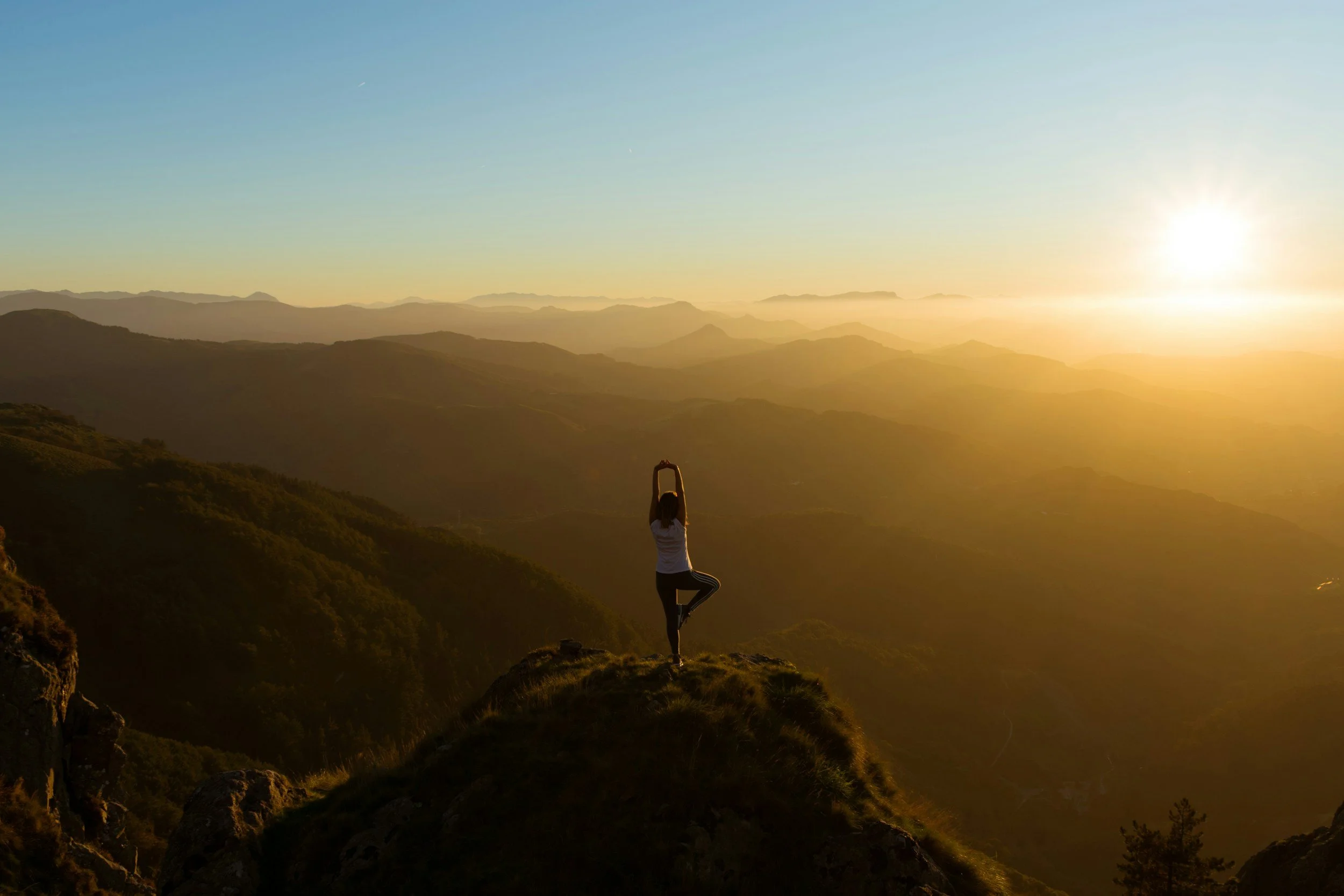
Yoga is a top recommendation of health professionals for a reason. This practice is one of the most effective exercises for whole-person health, emotionally and physically. Yoga incorporates mind, body, breath, and emotions. Practicing yoga is one way many trauma survivors rediscover their bodies as a place that feels safe. My favorite free resource for guided practices is Yoga With Adriene. I also encourage people to try in-studio classes if possible to connect with their community (pro tip: check if your local library offers free classes).
Aerobic Exercise
Activities like walking, swimming, jogging, or cycling are great ways to increase your heart rate and experience the benefits of physical activity.
Progress Not Perfection
My best advice is to focus on creating a daily movement practice. However, I know that for many people, myself included, this isn’t always feasible. Additionally, many people with disabilities or limited resources (time, space, etc.) can’t access movement as easily as those with more privilege. Avoid putting too much pressure on yourself, since that can be counterproductive. Give yourself credit for taking each small step towards taking care of yourself.
Healthy Distractions
Sometimes, the best medicine is a simple and enjoyable activity.
Make a list of different types of activities you enjoy, and schedule some time to do them throughout the week.
Have some activities on hand, such as games, craft materials, and books, to use as needed to relieve stress.
There’s a reason “grandma activities” have been making headlines. Engaging in simple, pleasurable activities is truly beneficial for our mental health.
Speaking of games, playing Tetris soon after a traumatic event has been shown to decrease intrusive memories of the event.
Centering
During times of high stress, experiences of trauma response, and significant anxiety, it can be really difficult to access our true selves. While our bodies are in survival mode, it can feel like the more rational and wise parts of our brains go offline. In particular, trauma impacts the brain, making decision-making and processing emotions more difficult. This is why it’s especially important to be proactive in preparing for times of stress and heightened emotions. Several ways to be prepared include:
Make a list of coping skills you can do on your own.
Create a safety plan if you have a history of thoughts about suicide.
List people whom you can turn to for distraction or support.
Write a letter to yourself with what you need to hear in a moment of distress or crisis, such as affirmations, quotes from inspirational people or loved ones, reminders of what you value and believe, etc.
Practice self-compassion. Start giving yourself the same grace and understanding you show your loved ones. Find more from an expert on this topic, Dr. Kristen Neff.
Community
Last but definitely not least, I can’t understate the vital role that having a strong support system has for everyone, especially for people experiencing mental health concerns. Having good social support acts as a protective factor, or it buffers one against the impact of stress. Having support has been shown to decrease stress, anxiety, and depression. I also can’t understate how finding community has become increasingly difficult for people, to the point where loneliness has been deemed an epidemic by the Surgeon General. Everyone needs support and a sense of belonging. We are social creatures, and our health is directly impacted by the quality of our relationships.
Make finding community and cultivating relationships a priority.
Prioritize the people who prioritize you, and invest in spaces that are mutually respectful and beneficial.
Stay Fresh
It’s really important to stay flexible and open to trying new things. Many people who have mental health conditions like depression, anxiety, and post-traumatic stress disorder (PTSD) often find that what works for a while doesn’t work forever. That’s totally normal.
Progress isn’t linear, and most people’s recovery looks like a few steps forward and a step or two back. What I’ve seen with pretty much every client who’s experienced trauma is that things get worse before they get better. Because of that, it’s crucial for trauma survivors to have a robust toolkit of things they can do to help them cope.
If you are looking for a therapist to help you overcome trauma, abuse, anxiety, or stress in your life, I welcome you to reach out. I’d love to connect with you to see how I can help.
Resources and Sources
Safety plans to prevent suicide
PTSD Coach and Mindfulness Coach from the VA
Overcoming Trauma through Yoga: Reclaiming Your Body by David Emerson and Elizabeth Hopper
Why Zebras Don't Get Ulcers by Robert Sapolsky
Veterans Affairs Coping with Traumatic Stress Reactions
30 Grounding Techniques to Quiet Distressing Thoughts
Stress Cycles: What They Are and How to Manage Them
Somatic Experiencing Research and Articles & Research
Adverse events in meditation practices and meditation-based therapies: a systematic review
Mindfulness may be associated with less prosocial engagement among high intelligence individuals
Physical Exercise and Mental Health: The Routes of a Reciprocal Relation
Physical activity, exercise, and mental disorders: it is time to move on
Pain: Is It All in the Brain or the Heart?
Understanding the stress response
Associations between Nature Exposure and Health: A Review of the Evidence
Preventing intrusive memories after trauma via a brief
intervention involving Tetris computer game play in the
emergency department: a proof-of-concept randomized
Why "Grandma Hobbies" Could Be the Secret to Better Mental Health
Social support and mental health: the mediating role of perceived stress
Our Epidemic of Loneliness and Isolation
Difference Between Sympathetic And Parasympathetic
Disclaimer: This article is provided for educational purposes only and is not to be considered medical advice or mental health treatment. The information contained herein is not a substitute for seeking professional medical advice for health concerns. Use of the techniques and practices outlined in this article is to be done cautiously and at one’s own risk, and the author/publisher is not liable for any outcomes a reader may experience. The author/publisher is not liable for any information contained within linked external websites.